
Part 2 of 2 · WooCommerce Growth · 2025–2026
- You started the year with a list. More revenue. Better customer experience. Higher repeat purchases. It felt good to write it down. It always does.
- Then February arrived. The traffic numbers looked the same. The cart abandonment rate was still embarrassingly high. And somewhere between Q1 planning and real life, the list got buried under a to-do app you stopped opening.
- Sound familiar?

Here’s the uncomfortable truth: most ecommerce goals don’t fail because of effort. They fail because the store itself isn’t built to support them.
The experience feels generic. The data isn’t telling you anything useful. And customers — who are now comparing you across Google, ChatGPT responses, Instagram Shops, and TikTok storefronts simultaneously — have zero patience for a journey that feels like it was designed in 2019.
In Part 1, we covered the foundations. This one is about the four areas that quietly separate stores that grow from stores that plateau. And they’re not what most people focus on.
01 · Personalization
Your store is talking to everyone. Which means it’s connecting with no one.
Think about the last time you walked into a store where the person at the counter actually remembered what you liked. Not in a creepy way. Just — they knew you. It felt good, right?
You probably stayed longer. Spent more.That’s what personalization is supposed to do online. And for years, it meant things like :
- “Hi [First Name]” in an email header,
- Or a homepage banner that said “Welcome back!
- “That’s not personalization anymore. That’s just mail merge.
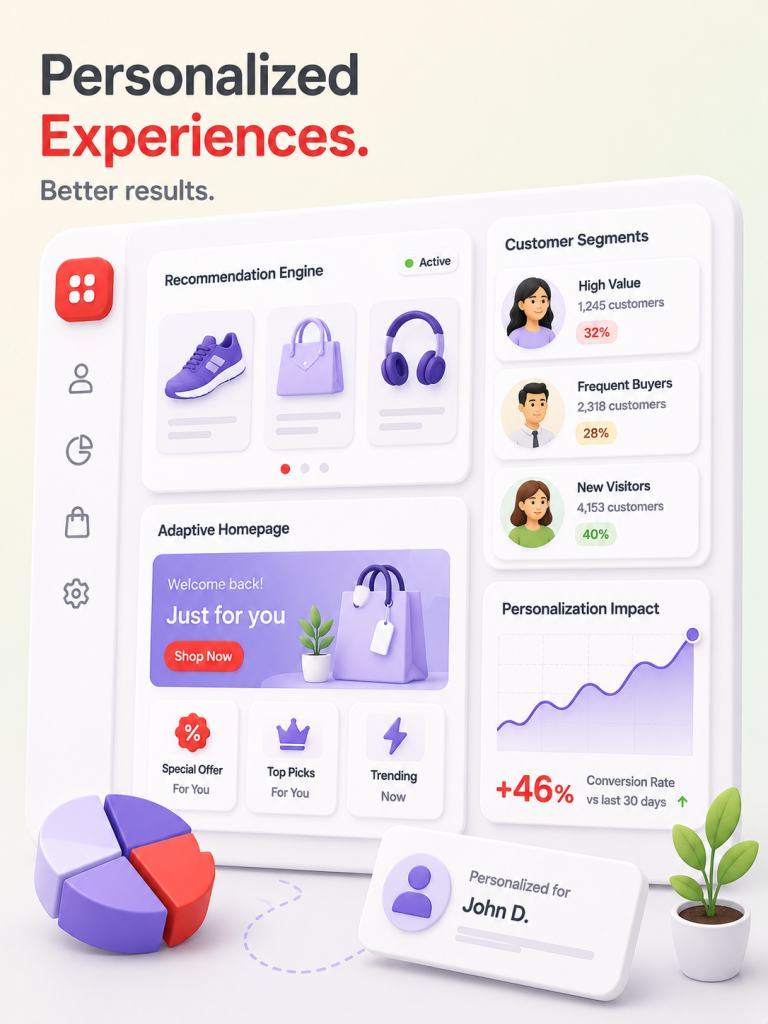
In 2025, personalization means your store responds to behavior in real time — not just who someone is, but what they’re doing right now, what they looked at, what they almost bought.
A fashion retailer showing a returning customer the exact category they browsed last Tuesday.A B2B supplier surfacing industry-specific bundles the moment a wholesale buyer logs in.A pet store that remembers you have a golden retriever and stops showing you cat food.
- Cart experience
- Checkout flow
- Promotional banners for different segments
- CTAs based on traffic source
WooCommerce has always given you the flexibility to build this. The question is whether you’ve actually built it — or whether your store is still showing the same homepage to a first-time visitor and a customer who’s bought from you six times.The easier it is for someone to find exactly what they need, the closer they are to buying. That math doesn’t change.
02 · Landing Pages
You spent money getting people to click. Then you sent them to your homepage.
This one genuinely hurts to watch.Someone clicks your Google ad. Or your email campaign. Or your Instagram story. They were interested enough to actually click — which, in 2025, is not nothing.And then they land on a homepage with twelve things competing for their attention, a navigation bar with six dropdowns, and a hero banner that says “Welcome to our store.”And they leave.
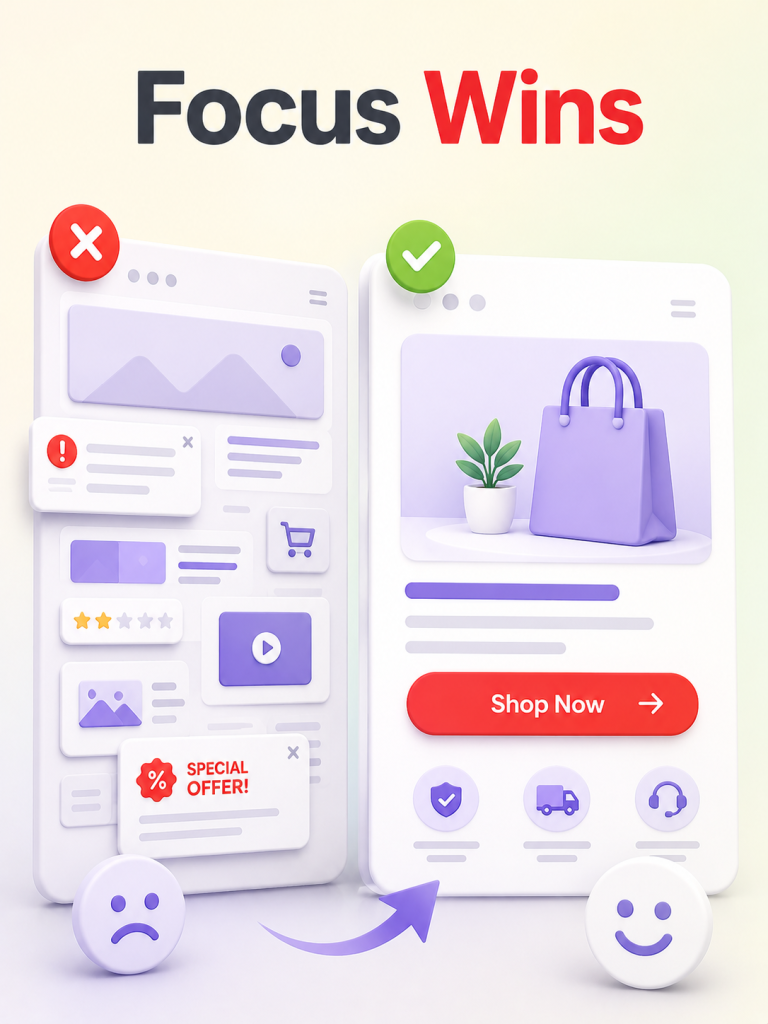
Every marketing campaign deserves its own destination. Sending paid traffic to a generic homepage is like planning a dinner party and making your guests figure out where the food is.
- Headline matching the ad
- Clear value proposition
- Genuine social proof
- Obvious CTA
- Too many offers
- Overly long forms
- Brand-focused copy
- Slow mobile pages
A/B test your headlines.Test your CTAs.The improvements feel small in isolation. They compound into something significant over a year.
03 · Analytics
You can’t optimize what you’re not measuring. And most stores aren’t measuring the right things.
Here’s a question: Do you know which page is killing your checkout completion rate?Not a guess. Not a feeling. Do you actually know?
Most store owners check traffic numbers. Sometimes conversion rate. And then they make decisions based on those two data points — which is like trying to drive somewhere new with only a speedometer.

- Cart abandonment rate by traffic source
- Customer lifetime value by acquisition channel
- Checkout completion rate by device type
- Repeat purchase rate over 90 days
Knowing where your visitors come from is only the beginning. The real question is: where do they leave — and why?
In 2025 and beyond, customer journeys are no longer linear.Someone discovers your product through a ChatGPT recommendation.They check your reviews on Google.They see your Instagram reel.They click a retargeting ad three days later and buy.
Last-click attribution makes it look like the ad did all the work. It didn’t. Your analytics need to reflect how people actually make decisions now — across channels, across devices, across time.
04 · Email Marketing
Everyone said email was dead. Email did not get the memo.
Social reach gets throttled. Ad costs keep climbing. Algorithm changes happen overnight and suddenly the audience you built on someone else’s platform isn’t yours anymore.Your email list? That’s yours. No algorithm between you and your customer.
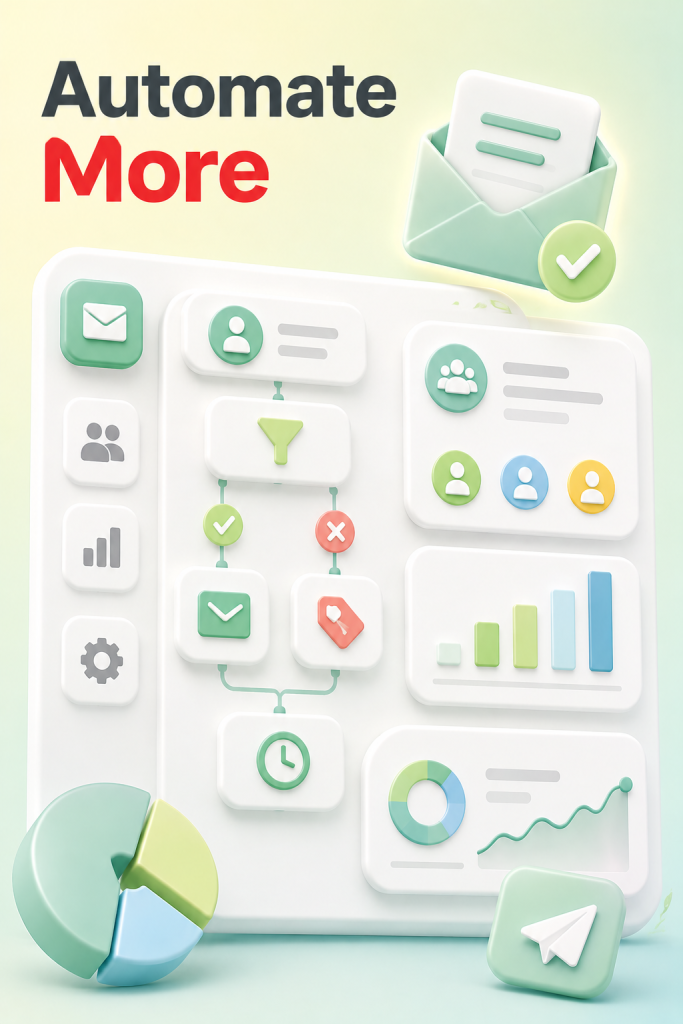
Email still delivers some of the highest ROI of any marketing channel.You’re not competing with a feed.You’re showing up in someone’s inbox.
The email campaigns that work aren’t the ones that look the most beautiful. They’re the ones that feel like they were written for exactly one person.
- First-time buyer onboarding sequence
- Re-engagement email after 90 days
- Early access for loyal customers
Segmentation is the difference between email that feels like marketing and email that feels like service.WooCommerce integrates with the platforms that make this possible.The question is whether you’re using those integrations — or just sending the same blast to your entire list every week.
Bringing it together: the stores that grow aren’t the ones with the biggest budgets.They’re the ones that refuse to guess.Personalization makes every visitor feel like the store was built for them.Landing pages make every campaign work harder.Analytics tell you what’s actually happening instead of what you hope is happening.Email keeps the relationship alive long after the first sale.
None of these are complicated in isolation.What’s hard is implementing them together, consistently, and then improving based on what the data tells you.Your WooCommerce store isn’t just competing with other WooCommerce stores anymore.It’s competing with the experience your customer had on Amazon yesterday, the seamless checkout they did on a mobile app last week, and the AI-powered product recommendation they got from a chatbot this morning.
That’s the bar. And the gap between “good enough” and “genuinely excellent” has never been easier to close — if you know where to look.
Start with one of these four.Get it right.Then move to the next one.That’s how resolutions actually become results.
Ready to actually do this?
Whether you’re starting with personalization, fixing your analytics setup, or finally building those landing pages — the best time to start was January. The second best time is now.